Recognizing excavator track wear before it leads to bigger problems
Why paying attention to track wear matters
An excavator's undercarriage takes a constant beating. Mud, rocks, gravel, and repeated high-torque movements wear down the track chain, track shoe, rollers, and sprockets over time. Many operators notice a slight vibration or a change in machine handling and keep working, assuming the issue will sort itself out. It will not. Ignoring the early signs of track wear leads to more expensive repairs and unplanned downtime. Knowing what to look for helps you decide when to schedule a repair for damaged crawler components before a small problem becomes a major breakdown.
Track wear is not always obvious from a quick walk-around. Some signs show up in performance long before the metal looks thin. A machine that pulls to one side, makes a clunking noise when turning, or leaves uneven track marks on soft ground is telling you something. Catching these symptoms early gives you a chance to plan the work and keep the machine productive.
Common signs of track chain and shoe wear
The track chain is the backbone of the undercarriage. It links the track shoes together and transfers power from the sprocket to the ground. Over time, the pins and bushings wear, causing the chain to stretch. A stretched chain changes the pitch distance between the pins, which then accelerates wear on the sprocket teeth and the idler. You can check for chain stretch by measuring the distance between a set number of links and comparing it to the manufacturer's spec. A difference of more than a few millimeters means the chain needs attention.
Track shoes wear differently depending on the ground conditions. On rocky sites, the grousers (the raised bars on the shoe) become rounded or chipped. On sandy or abrasive soil, the shoe face thins out. Worn shoes lose grip, making the excavator slide sideways when digging or traveling on slopes. They also put extra load on the track chain because the machine has to work harder to get traction. If the shoes are worn unevenly - for example, more on one side than the other - it could indicate a misaligned undercarriage or a bent track frame.
Rollers, idlers, and sprockets: what to inspect
The bottom rollers carry the weight of the machine. They run on the inside of the track chain and take the heaviest load. Worn bottom rollers develop flat spots, flaking metal on the tread surface, or leaking grease from the seals. A roller that does not turn freely causes the chain to drag, which increases fuel consumption and accelerates wear on the chain and the roller itself. You can check by jacking up one side of the excavator and spinning each roller by hand. A roller that is hard to turn or makes a grinding noise should be replaced.
Top rollers support the return side of the track chain. They see less load than bottom rollers but still wear over time. A seized top roller can cause the chain to slap against the track frame, creating noise and vibration. The idler wheel at the front of the undercarriage guides the chain and maintains track tension. Worn idler flanges become sharp or develop a groove that catches the chain links. If the idler has a wobbly movement when the track rotates, its bearings may be failing.
The sprocket at the drive end transfers engine power to the track chain. Its teeth engage the chain bushings. As the chain stretches, the sprocket teeth wear in a hooked shape rather than a smooth curve. A hooked sprocket accelerates chain wear because the bushing does not seat correctly. Conversely, a new chain on a worn sprocket will wear out quickly. Many undercarriage specialists recommend replacing the sprocket and chain together to keep the wear pattern matched.
Track tension: a simple check that prevents damage
Track tension is one of the easiest things to verify and one of the most commonly overlooked. Too loose, and the chain can jump off the sprocket or derail. Too tight, and it puts excessive load on the chain, rollers, and idler bearings, causing them to overheat and fail early. Each excavator model has a specified sag measurement - the distance the track droops when lifted off the ground at a certain point. Checking tension weekly and adjusting it for the ground conditions (looser in mud to prevent packing, tighter on hard ground for stability) extends undercarriage life noticeably. A grease gun is usually all you need to adjust the tensioner.
If you notice the track chain hanging low or the machine vibrating when traveling straight, start with a tension check. Low tension can also cause the track to slap against the undercarriage frame, which sounds like a rhythmic knocking. That sound is a clear signal to stop and check. Continuing to run with a loose track can bend the chain links and damage the track frame.
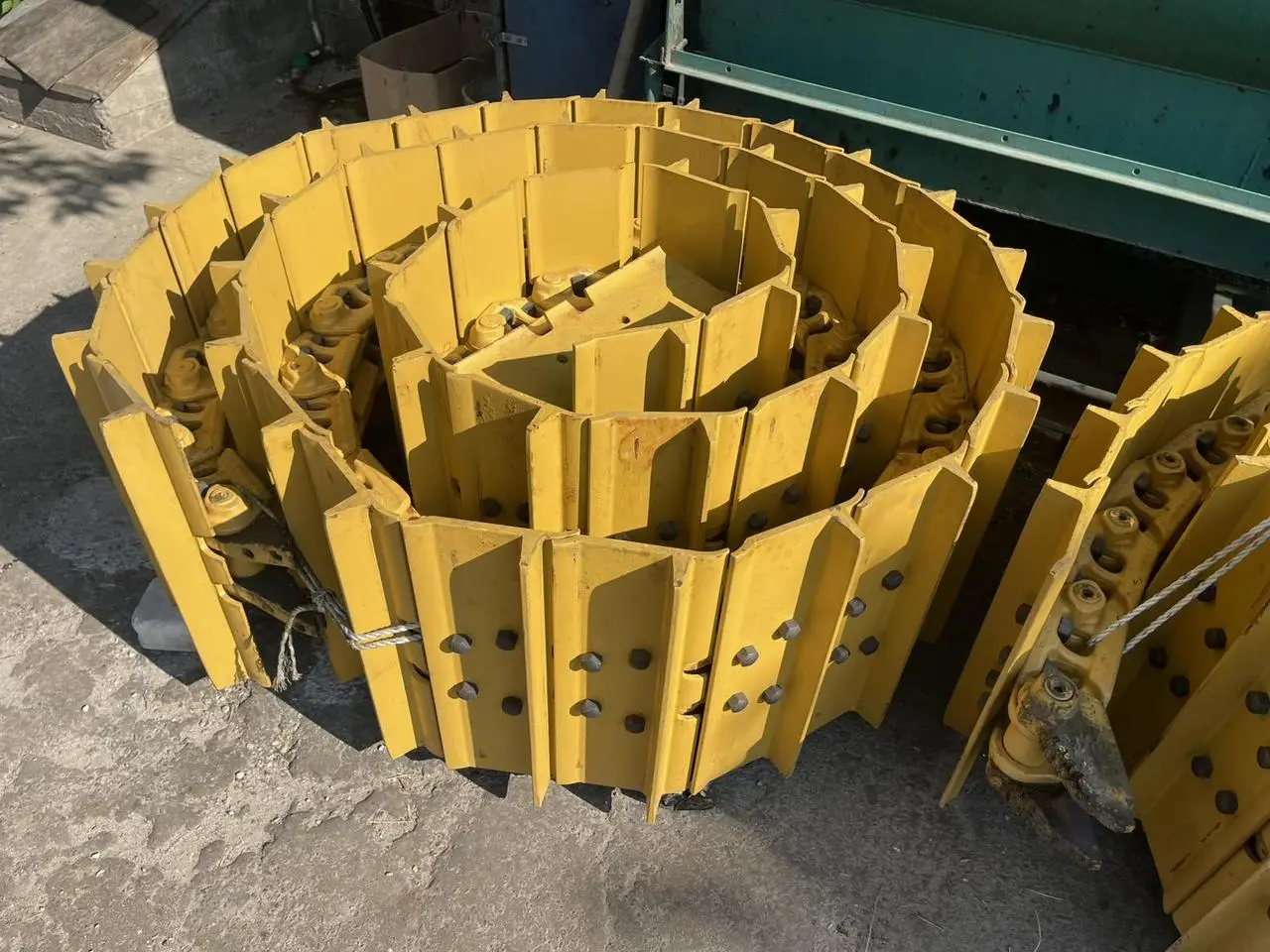
When wear signs point to a bigger issue
Some wear patterns indicate problems beyond normal aging. If the track shoes show a diagonal wear pattern, the undercarriage may be out of alignment. An alignment issue can be caused by a bent track frame, worn equalizer bar bushings, or loose mounting bolts. Catching this early prevents uneven wear across the entire undercarriage. Another sign to watch for is metal fatigue cracks on the track shoe grouser or around the bolt holes. Cracks usually start small but grow quickly under load. A cracked shoe can break off while the machine is working, throwing the track off and causing secondary damage to the chain and rollers.
Leaking seals on rollers or idlers are a sign that grease or oil is escaping. Once the seal fails, contaminants get inside and grind down the bearing surfaces. A roller that leaks a small amount of grease may still run for a while, but it will eventually seize. Plan to replace it at the next scheduled maintenance. Waiting until it fails often means replacing the chain as well because the seized roller damaged the chain links.
Planning for restoration and replacement
When wear reaches the point where individual components are failing, the most cost-effective approach is often a planned undercarriage restoration. This involves replacing worn parts - chain, shoes, rollers, sprockets, and idlers - with new or rebuilt components that match the machine's specifications. A full restoration returns the machine's performance and reduces the risk of sudden breakdowns. Many equipment owners find that scheduling a repair for damaged crawler components during a slow season or between big jobs minimizes downtime and keeps the machine available when it is needed most.
Restoration does not always mean replacing everything. Some parts, like sprockets or idlers, can be rebuilt if the wear is not too advanced. Track shoes with worn grousers can sometimes be rebuilt by welding new bar material onto the existing shoe. The decision depends on the cost of the rebuild versus the cost of a new part and the expected remaining life of the rest of the undercarriage. A worn chain that is still within its service limit may pair well with rebuilt rollers, but a chain that is stretched beyond spec should be replaced to avoid premature wear on the new parts.
Making the call before it costs you
The most expensive repair is the one you did not plan for. An excavator that throws a track in the middle of a dig costs you the repair bill plus the lost production time and possibly the cost of a recovery truck. A machine that keeps working with a seized roller damages the chain and the track frame, turning a single component replacement into a major undercarriage job. Learning to recognize the early signs of wear - chain stretch, uneven shoe wear, leaking rollers, abnormal noises, and tension problems - lets you schedule repairs on your terms.
A quick weekly inspection takes ten minutes. Walk around the machine, look at each component, listen for odd sounds, and check the track tension. Compare the wear on the left and right tracks; they should be similar. If one side shows significantly more wear, investigate the cause. Keeping a log of measurements and observations helps you spot trends and plan replacements before a component fails. That kind of simple habit saves money and keeps the excavator working when you need it.
Ends · DIGGINGGEAR